
Automatic & hybrid
We specialise in repairing auto & hybrid vehicles.
All Manufacturers
We can repair all vehicle makes and models.
12 Month Warranty
On all transmission and gearbox repairs.
Collection & Delivery
Available nationwide
DSG Gearbox Problems? Diagnose the Cause Before Replacing Parts
Juddering, harsh gear changes, slipping, warning lights or loss of drive can be caused by DSG clutch, mechatronic, hydraulic or internal gearbox faults.
DSG transmissions combine fast gear changes with a dual-clutch system, but when something goes wrong, different faults can produce very similar symptoms.
Specialist diagnosis helps identify whether the problem is coming from the clutch system, mechatronic unit, hydraulic control or the gearbox itself before unnecessary parts are replaced.
Correct diagnosis is the first step in deciding whether the fault needs servicing, clutch work, mechatronic repair or wider gearbox repair.

Common Signs of a DSG Gearbox Problem
DSG faults can show themselves in several different ways depending on whether the problem involves the clutches, mechatronic unit, hydraulic system or internal gearbox components.
Juddering or Shaking
Shuddering when pulling away or changing gear can point towards clutch, adaptation or control problems.
Harsh Gear Changes
Sudden or aggressive shifts can be linked to mechatronic, hydraulic pressure or clutch-control faults.
Slipping or Flared Changes
Engine revs rising without the expected acceleration may indicate clutch wear or incorrect gearbox control.
Delayed Drive or Reverse
Hesitation before Drive or Reverse engages can be associated with hydraulic, clutch or mechatronic problems.
Gearbox Warning Lights
Dashboard gearbox warnings can appear when the transmission control system detects a fault.
Loss of Drive or Limp Mode
A DSG gearbox may restrict operation or lose drive when a serious control or transmission fault is detected.
These symptoms do not prove which DSG component has failed. Fault-code analysis and specialist testing are needed to identify the actual cause.
How Does a DSG Gearbox Work?
A DSG gearbox uses two separate clutches to control different sets of gears. One clutch manages one group of gears while the second prepares the next gear, allowing very fast changes without the interruption you would normally feel in a conventional automatic transmission.
The clutch system works alongside a mechatronic unit, which combines electronic control with hydraulic pressure to decide when and how the gearbox changes gear.
Because the clutches, hydraulics, sensors and electronic controls all work together, a fault in one area can sometimes create symptoms that appear to come from another.
Common DSG Fault Areas
DSG problems are often linked to a handful of key components and control systems.
DSG Clutch Wear
Worn clutch packs can contribute to juddering, slipping, poor engagement and rough gear changes, particularly when pulling away or driving at low speed.
Mechatronic Unit Faults
The mechatronic unit controls hydraulic pressure and gear selection. Electrical, hydraulic or internal faults can affect shifting, engagement and overall gearbox operation.
Hydraulic Pressure Problems
Incorrect or unstable hydraulic pressure can affect clutch application and gear selection, causing delayed engagement, harsh changes or loss of drive.
Internal Gearbox Wear
Bearings, shafts, gears and other internal components can also wear or become damaged, creating noise, vibration or more serious transmission problems.
Not Sure Which DSG Component Is Causing the Problem?
Specialist diagnosis can help identify whether the fault is clutch, mechatronic, hydraulic or internal before the repair route is decided.
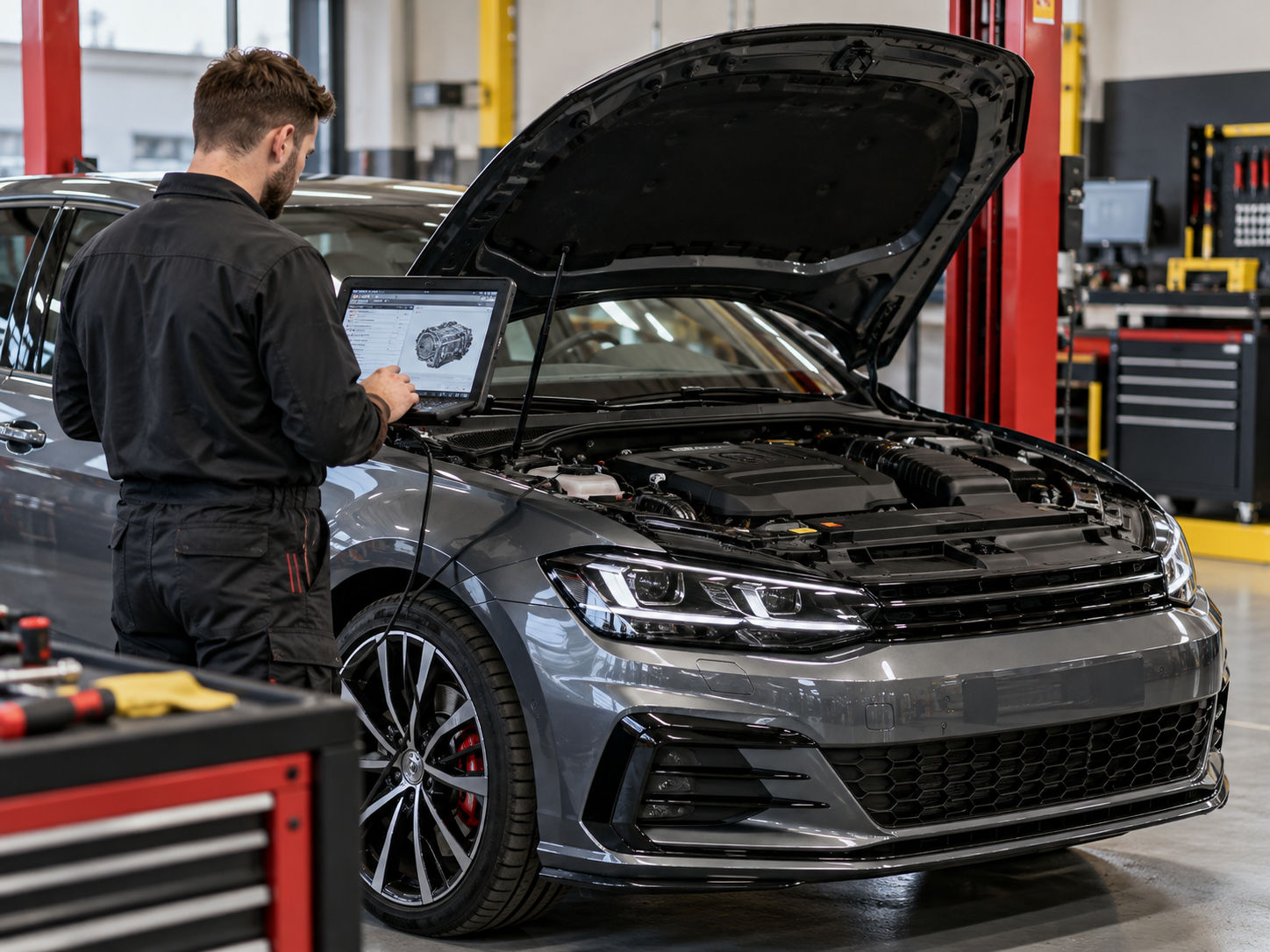
DSG Mechatronic Repair & Testing
The mechatronic unit is one of the most important control systems inside a DSG gearbox, combining electronic control with hydraulic pressure to manage clutch operation and gear selection.
When the mechatronic unit develops a fault, the gearbox may begin to change gear harshly, hesitate, enter limp mode, display warning lights or lose drive altogether.
Because these symptoms can also be caused by clutch wear, hydraulic pressure problems or internal gearbox damage, the mechatronic unit should be properly tested before replacement is considered.
Proper testing can help identify whether the issue is electrical, hydraulic, mechanical or caused by another DSG component.
Mechatronic Diagnosis
Fault-code analysis and live data can help identify control faults, pressure problems and abnormal DSG operation.
Hydraulic & Pressure Testing
Hydraulic performance can be assessed to identify pressure loss, control problems and faults affecting clutch or gear engagement.
Repair or Replacement
Depending on the fault and condition of the unit, repair may be possible rather than automatically replacing the complete mechatronic assembly.
Coding, Programming & Adaptation
DSG control units may require coding, programming, basic settings or adaptation after certain repairs or component changes.
Why DSG Mechatronic Testing Matters
Mechatronic units are complex and expensive components. Confirming the actual cause of the fault before replacement can reduce unnecessary parts costs and help ensure the repair addresses the real gearbox problem.
DSG Warning Light, Harsh Changes or Loss of Drive?
Tell us what the gearbox is doing and our technicians can advise on the appropriate DSG diagnostic route.
DSG Servicing, Repair & Rebuilding
DSG gearboxes need the correct servicing and repair approach depending on the transmission type, mileage, condition and fault found.
Some DSG problems can be addressed through servicing, clutch work or mechatronic repair, while others may require more extensive internal gearbox work.
Diagnosis should come first so the repair is matched to the actual condition of the transmission rather than replacing parts unnecessarily.
DSG Gearbox Servicing
Regular servicing helps maintain the correct fluid condition and hydraulic operation within applicable DSG transmissions.
- DSG oil changes
- Gearbox filter replacement where applicable
- Correct transmission fluid specification
- Inspection for leaks or contamination
- Diagnostic checks where required
When Servicing Will Not Fix the Problem
A DSG service cannot repair worn clutches, damaged mechatronics or serious internal gearbox faults.
- Persistent clutch judder
- Loss of drive
- Repeated limp mode
- Mechatronic faults
- Severe slipping or harsh engagement
No. DSG service requirements vary depending on the gearbox type and manufacturer specification. The correct transmission should be identified before deciding what servicing is required.
Does Your DSG Need a Repair or a Full Rebuild?
The correct repair route depends on what testing finds inside the transmission and control system.
DSG Clutch Repair
If the problem is isolated to worn clutch components, clutch replacement and the required setup or adaptation may be enough to restore correct operation.
Mechatronic Repair
Where diagnosis confirms a mechatronic fault, the unit may be tested and repaired or replaced depending on the fault and condition.
Complete DSG Rebuild
A rebuild may be required where there is wider internal wear, mechanical damage, contamination or multiple failing transmission components.
Repair the Fault, Not Just the Symptom
Juddering, slipping or warning lights do not automatically tell you which component has failed. Proper testing helps determine whether the gearbox needs servicing, targeted component repair or more extensive rebuilding.
Specialist Automatic Transmission Experience Since 1991
Beds Automatic Transmissions has specialised in automatic transmission diagnosis, repair and rebuilding for decades.
Our DSG work combines traditional transmission knowledge with modern electronic and hydraulic diagnosis, helping us identify whether a targeted clutch or mechatronic repair is suitable or whether the wider gearbox needs attention.
Not Sure What Your DSG Gearbox Needs?
Tell us the vehicle, mileage and symptoms and our technicians can advise on the appropriate diagnostic and repair route.
DSG Gearbox FAQs
DSG gearbox problems can involve the clutch system, mechatronic unit, hydraulic controls or internal transmission components. These are some of the questions our technicians are commonly asked.
What are the symptoms of a DSG gearbox problem?
Common symptoms can include juddering, harsh gear changes, slipping, delayed engagement, gearbox warning lights, limp mode, incorrect gear selection and loss of drive.
Can a DSG gearbox be repaired?
Yes. Many DSG faults can be repaired depending on the gearbox type, the component affected and the overall condition of the transmission.
What is a DSG mechatronic unit?
The mechatronic unit combines electronic control with hydraulic operation to manage gear selection, clutch operation and hydraulic pressure inside the DSG gearbox.
What are the symptoms of a faulty DSG mechatronic unit?
Possible symptoms include harsh or delayed gear changes, warning lights, limp mode, difficulty selecting gears, loss of drive and inconsistent gearbox behaviour.
Can a DSG mechatronic unit be repaired?
In some cases, yes. Whether repair is suitable depends on the fault identified and the condition of the unit. Proper diagnosis should be carried out before replacement is considered.
How much does DSG mechatronic repair cost?
Costs vary depending on the DSG gearbox, the type of mechatronic unit and the fault found. Diagnosis is normally required before an accurate repair price can be provided.
What causes a DSG gearbox to judder?
DSG judder can be caused by clutch wear, incorrect clutch adaptation, mechatronic problems, hydraulic faults or other transmission issues. Testing is needed to confirm the cause.
Can a DSG clutch be replaced without replacing the gearbox?
Potentially, yes. If diagnosis confirms the fault is isolated to the clutch system and the rest of the gearbox is serviceable, targeted clutch repair may be suitable.
How often should a DSG gearbox be serviced?
Service requirements vary between DSG gearbox types and manufacturer specifications. The correct transmission should be identified before deciding the appropriate service interval.
Can I drive with a DSG gearbox fault?
That depends on the severity of the fault. If the gearbox is slipping badly, losing drive, changing gear violently or repeatedly entering limp mode, specialist advice should be sought before continuing to drive.
Need Help With a DSG Gearbox Problem?
Tell us the vehicle registration, mileage and what the gearbox is doing. Our technicians can advise on the appropriate diagnostic and repair route.


Recent Customer Reviews
I cannot recommend this company highly enough. They said they would attempt to repair the gearbox (which Audi wanted to replace in total) which they did with great efficiency. Nino, the owner, was also kind enough to write a repair report for me.